

When I was first asked to be the content editor for Linda Dindzans, I had no idea what I was getting into. Sure, I’d edited other books before, but this was my first foray into editing Biblical fiction–a responsibility that felt heavier than others because I wanted to make sure we got it “right.” Linda has since become a sweet friend, and I now look forward to editing her stories. Not only are they beautifully told, but they also stretch me and make me see pieces of the Bible I thought I knew in a new way. I’m excited to introduce her to you today.

What inspired you to become an author after retiring from the medical field?
For years, I had been an avid reader, and somewhere along the way, a story idea set in ancient Babylon took hold of my imagination and simply would not let go. I often caught myself writing scenes in my head, but between my medical practice and family life, I never found the time to put them on paper, much less learn the craft of writing fiction.
When my medical practice entered a period of transition, I decided to take a sabbatical. After several months, my husband and I began to sense that what I had intended as a temporary break was actually a new calling.
It seemed the Lord was inviting me to lay down my scalpel and pick up my pen.
And so began my unexpected second career as an author of biblical fiction.
How have your past experiences in the medical field affected your writing?
The times of the Bible were not only scandalous but downright treacherous. Disease, injury, and death were ever-present realities, and medical care was a far cry from what we know today.
One of my particular interests during my years in medical practice was the history of medicine. In my first novel, A Certain Man, characters face the dangers of childbirth, summer fever, and lockjaw (tetanus). My medical background helps me portray these conditions realistically while remaining faithful to the cultural understanding of the human body, illness, healing, and death in biblical times.
But medicine is only part of the story.
I was also a fairly serious violinist in my youth. Later, as a pediatric ear, nose, and throat surgeon, I developed a special interest in caring for the professional voice in patients of all ages. After retirement, I sang with the Bel Canto Chorus in Milwaukee.
Music has found its way into my novels, too. Sometimes a singing voice moves the story forward, while at other times, a particular harp performance becomes crucial to the plot.
I believe my musical background also influences the cadence and rhythm of my prose. I love the sound of biblical language and strive for word choices that evoke the period without making the writing difficult for modern readers.
For instance, I never use contractions in my novels. To my ear, they immediately lend the dialogue a more contemporary sound.
Who knew that a scalpel, a violin bow, and a pen would have so much in common?
Why did you choose biblical fiction? What first spurred you down that road?
Although I read widely across genres, for many years I found myself returning to generous helpings of biblical fiction. I was particularly inspired by the novels of Brock and Bodie Thoene, Francine Rivers, Angela Hunt, Lynn Austin, and Mesu Andrews.
I suppose biblical fiction chose me as much as I chose it. The story that first took hold of my imagination was set in ancient Babylon. But that manuscript grew rather unwieldy, so I set it aside to write my A Certain Future series. Writing this series has brought together three of my greatest loves: Bible study, storytelling, and tales of redemption.
There truly is “nothing new under the sun.” I am fascinated by the ordinary people who lived through extraordinary biblical events. They experienced the same human struggles we face today: guilt, shame, grief, fear, forgiveness, and the longing for hope. I believe “there is nothing new under the sun” and those struggles resonate just as deeply with readers today.
Biblical fiction allows me to explore those timeless struggles while inviting readers to walk the dusty roads of the ancient world alongside my characters.
What is the one thing you hope readers will take away from your stories?
Jesus understood that we are wired for story. After all, He taught so often and so effectively through parables.
My hope is that my novels will do more than entertain. I want readers to become so immersed in the world of first-century Judea that they begin to imagine themselves living alongside the characters.
What would they have thought? Whom would they have believed? How might they have responded if they had witnessed the events surrounding Jesus of Nazareth?
And ultimately, how might they respond to His claims today?
I also hope my books will be shared as gifts or recommended to friends and family members who might never pick up a Bible or enter a church.
If a compelling story can open the door to curiosity about Jesus, perhaps even to a deeper exploration of faith, then my writing has served a purpose far greater than simply filling the pages of a book.
What is one of the coolest things you have discovered while researching?
Chariot racing. And what a wild ride that research turned out to be.
A Certain Mercy features a chariot race at the hippodrome in Caesarea. When most people picture an ancient chariot race, they probably remember the unforgettable scene from the movie Ben-Hur.
But the real races were far more complicated than one charioteer competing against another. They were a war on wheels.
Charioteers were supported by teams that included mounted outriders who maneuvered to obstruct opponents and help their own drivers gain an advantage. Men on foot also played supporting roles, including tending to the horses and splashing water on them from the central barrier of the racecourse, called the spina.
And then there were the fans…
Much like today’s passionate sports enthusiasts, supporters of the major racing factions in Rome could be fiercely loyal to their teams. The four principal factions were known by their colors: Red, White, Blue, and Green.
Some fans even resorted to decidedly underhanded tactics. Ancient curse tablets reveal attempts to hex rival charioteers, their horses, or entire teams.
I had tremendous fun weaving some of these fascinating details into A Certain Mercy. Let’s just say that the chariot race is anything but a leisurely trot around the hippodrome.
What is one fact about yourself that very few people already know?
I handwrite the first rough drafts of my novels. And not just with any pen.
I write in purple ink on lavender steno pads.
I had never been particularly devoted to handwriting before becoming an author, but when I began writing fiction, I felt an inexplicable urge to write in my favorite color: purple.
Some of my writer friends teased me about this little quirk, and I occasionally wondered whether I was being rather silly. But the habit stuck, and before long, purple ink and lavender paper became part of my writing routine.
Then something remarkable happened.
While researching the chariot race in Ben-Hur, I discovered that Lew Wallace, the author of Ben-Hur: A Tale of the Christ, had copied his final manuscript in purple ink.
Wallace chose purple as a tribute to the Christian season of Lent. When he delivered his handwritten manuscript to Harper & Brothers in March 1880, the publishers reportedly considered it “the most beautiful manuscript that has ever come into this house.”
Imagine my delight.
After years of feeling inexplicably drawn to writing in purple ink, I discovered that the author of one of the most celebrated Christian historical novels had done the very same thing.
A sense of confirmation washed over me. Perhaps my purple-ink habit was not quite so peculiar after all.
I still write my first drafts in purple ink on lavender steno pads, but now I do so with a more conscious prayer that every word I write will be for His glory and His purposes, in His time.
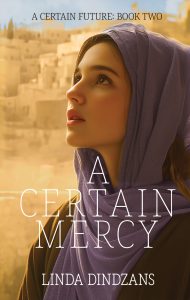 A Certain Mercy
Zara is trapped in a lonely, loveless marriage with an obsessed gambler. Yearning for freedom and love, her only solace comes in stolen tender moments with Auriga Maximus, famed charioteer and her husband’s slave. Faced with a heart-wrenching choice between duty and desire, will she cling to comfort as a rich wife or risk her own life?
As Jerusalem teeters on the edge of rebellion, Zara navigates betrayal, the stirrings of love, and the shadows of her past. Along her journey, she encounters iconic figures—Lazarus, Mary Magdalene, Miriam the mother of Yeshua, and Herodias.
From the Temple courts to the roar of the Hippodrome, A Certain Mercy blends romance, suspense, and biblical truths—a moving story of second chances.
A story of a woman immortalized in the gospels.
A story of forgiveness of others and forgiveness of self.
A story of the path to eternal love and eternal life.
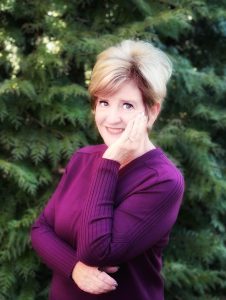 Linda Dindzans, M.D., is an award-winning author with the heart of a healer. A Certain Man is her debut novel set in ancient Samaria. A Certain Mercy, Book Two in A Certain Future Series was released December 9, 2025.
Website: lindadindzans.com
FB: Linda Dindzans, Author
X: @lindadindzans
IG:@lindadindzans
0 Comments