
How does an author decide what research to include or leave out in her story? Well, it’s not always easy, as you’ll find out from our guest today. Author Donna Jo Stone chats about how much she learned about the 1930’s … and how much she included in her book.
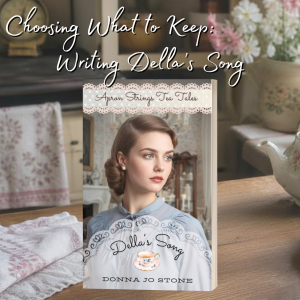
Every book I write seems to come with its own unique challenges and choices, and Della’s Song was no exception. Although I’ve always loved fairytales and am addicted to retellings, writing a fairytale-inspired novel was a new task for me. Even so, when Amy Walsh asked if I’d like to join the new Apron Strings Tea Tales multi-author series, I was all in. Like the first Apron Strings series, each of these books features Mrs. Canfield’s cookery book, but this time all the stories take place between 1918 and 1939, during the interwar years. My novel is set in 1934 in North Louisiana at the fictional Hotel Fairwood, which has an attached tearoom. Della is part of a family gospel singing group, The Swan Family Singers, until tragedy strikes and they can no longer travel and perform.
Della’s Song was inspired by The Six Swans (or Seven Swans, or Wild Swans, depending on the version) because I was drawn by the idea of a sister who saved her brothers. I love researching, and dug into the many variations with perhaps a bit too much enthusiasm, taking copious notes. Della’s Song isn’t recognizable as any of the traditional tales, but I tried to wiggle in as many elements as possible, and it was tough weeding out the parts that didn’t fit, choosing how and what to include. It would have been easy to overload the story unnecessarily.
The 1930s are fascinating to me, and I found myself going down rabbit holes, so much so that I wrote a series of blog posts about a few of them. I took forays into various topics, including sewing and fashion of the era. The dresses and fabrics of the 1930s particularly caught my fancy. Being a sewist, I was sorely tempted to try my hand at recreating a frock, but I had a deadline and needed to exert a little self-control and focus on the book. Putting my sewing project on the back burner was another choice, one I had to make in order to meet the deadline!
Some research topics were more useful than others. What started as an interesting side detail about pie vents—ceramic vents placed in the center of an uncooked pie to let steam out and prevent filling leakage—became central to the story, serving many functions throughout. It became a motif, then prompted Della to write a song, and, at a later time, provided a smidge of humor, as shown by the following excerpt when Della is learning to make a pie.
“She assessed today’s completed strawberry pies lined up on the counter. Two they’d made together, most of the work done by her aunt, and her one solo attempt, a sad pie bleeding red in the center, creating a pool around the ceramic blackbird pie vent. The poor bird looked as if it had been murdered and was gasping for a last breath, mired in a pool of its own blood.”
Poor Della. I’m sure it tasted just fine.
Learning about the era and sprinkling details into my story was satisfying, but I spent more time than I should have researching figures of speech, decor, vehicles, and sundry other peripheral subjects. (Even throw pillows, I kid you not!) I often went down those research rabbit holes, most happily, I’ll admit. Curiosity has a way of leading me farther than I expect, and it was sometimes difficult deciding what to include. Each choice needed to be intentional and shape the setting, characters, or plot, sometimes obviously, sometimes subtly, but I couldn’t share everything I learned about Della’s world.
There are moments when you have to pick the best and let go of the rest.
The selection process of deciding what works best came to apply to more than just what ended up on the page. I hate to admit it, but like many authors, I’ve had to adjust to the physical realities of this season of my life. Long stretches at the desk require more breaks than they once did. It’s surprising how much energy it takes to write all day! Without being a wise steward of my physical capabilities, I will quickly burn out and won’t make it to the finish line.
When I started writing Della’s Song, I knew I’d learn a plethora of new things. Now, looking back, I think the real value of writing this book for me was more than just finishing the story, but was also the process of relearning to be wise with my choices to create the world I intended.
That idea doesn’t only apply to creating a book. It is true in every aspect of daily living. Surrounded by interesting directions and distractions, many worth exploring in their own way, I need to choose those that carry my own life story forward. Instead of worrying about what I might miss out on, I try to remember that I don’t have to include or participate in everything to reach my goals or create a fulfilling path. Leaving out the unnecessary helps me focus on what remains, the parts that matter, and give the rest of the “story” shape.
It’s a practice I’m still learning, both in writing and in life.
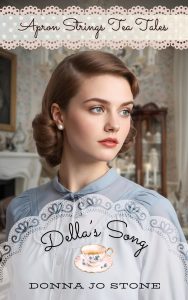
In the wake of a devastating train accident, Della Swan’s world is shattered. Her father and brother are forever changed, and the Swan Family Singers have no choice but to depend on the charity of formidable Aunt Leticia, proprietor of the Hotel Fairwood.
Of Della’s six brothers, only two remain with her at the hotel: Quiet Max, the youngest, and Frank, the pianist who lost his arm—and his heart for music. The rest are sent away to school or work. Aunt Leticia believes the children must learn to make their way in the world, effectively banishing them.
During Father’s recovery, the repercussions of his head injury make one thing clear. Life as the Swans knew it, traveling the south and sharing gospel music, may never return. Yet Della clings to the belief that God isn’t finished with her family or their calling and sets a plan in motion to bring them together again.
When she develops an unexpected bond with Clayton Miller, the hotel’s reserved, long-time employee, his steady presence reminds her there is often more to people—and situations—than meets the eye.
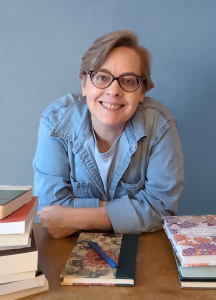 Donna Jo Stone writes southern-flavored, faith-forward novels in multiple genres. Her stories are often about flawed people facing tough times but doing their best in the middle of real-life challenges, and focus on finding hope in the messiness.
Her recent awards include a 2025 Carol for When the Wildflowers Bloom Again and a 2025 SCWC Notable Book Award for Promise Me Tomorrow.
When she’s not writing, reading, or talking about writing or reading, she loves spending time with her family and friends or creating art.
To learn more about Donna Jo visit https://donnajostone.com.
Amazon Author Page: https://www.amazon.com/stores/Donna-Jo-Stone/author/B0CR8VJT1S
Facebook: https://www.facebook.com/donnajostoneauthor
Instagram: https://www.instagram.com/donnajostone